Introduction
The second cycle of our Investigative Masterclass (previously called “Investigations 101”) is now complete, and it marked an important step in empowering Asia’s animal rights investigative ecosystem. The first cycle was conducted in January 2025. Between October 2025 and January 2026, participants joined us for 12 weeks of weekly online sessions, paired with home assignments and follow-up discussions designed for questions, reflection, and shared problem-solving.
The goal of the masterclass was simple but ambitious: to equip activists with the practical skills, safety awareness, documentation standards, and strategic thinking required to conduct investigations effectively and responsibly. Just as importantly, it was designed to connect people – supporting networking between newer and seasoned investigators, with benefits that are professional, social, and mental. With speakers from across Asia and beyond, including contributors from We Animals Media, FIAPO, and Sinergia Animal International, Cycle 2 offered both grounded regional focus and global perspective.
Program Design: What Cycle 2 Looked Like in Practice
1. A 12-week Structure Built for Depth and Practice
Cycle 2 followed a consistent weekly rhythm. Each week introduced a new topic connected to animal rights investigations, ranging from equipment and photojournalism to biosecurity, mental health, strategy, and more. Every lesson was followed by a home assignment intended to help participants move from understanding concepts to applying them. Several days later, we held follow-up sessions to discuss questions, unpack challenges, and strengthen learning through peer exchange.
This design wasn’t accidental. Investigations are a craft: they require careful planning, strong documentation, safety awareness, and the emotional stamina to keep going when the work is difficult. Our goal was to give participants an in-depth view of the investigative space – how it functions, what standards are needed, and what habits help investigators work effectively and responsibly over time.
2. Learning from Experts Across the World
A core strength of the masterclass is the people who deliver it. Cycle 2 was led by skilled, experienced activists from across the region and around the globe – professionals who chose to invest their time and knowledge in others. Among our speakers were contributors from organizations such as We Animals Media, FIAPO, and Sinergia Animal.
That willingness to voluntarily share real-world insights is what made the sessions far more than standard training programs. Participants weren’t just hearing theory; they were learning directly from professionals who have navigated ethical dilemmas, field risks, media strategy, and long-term campaign planning.

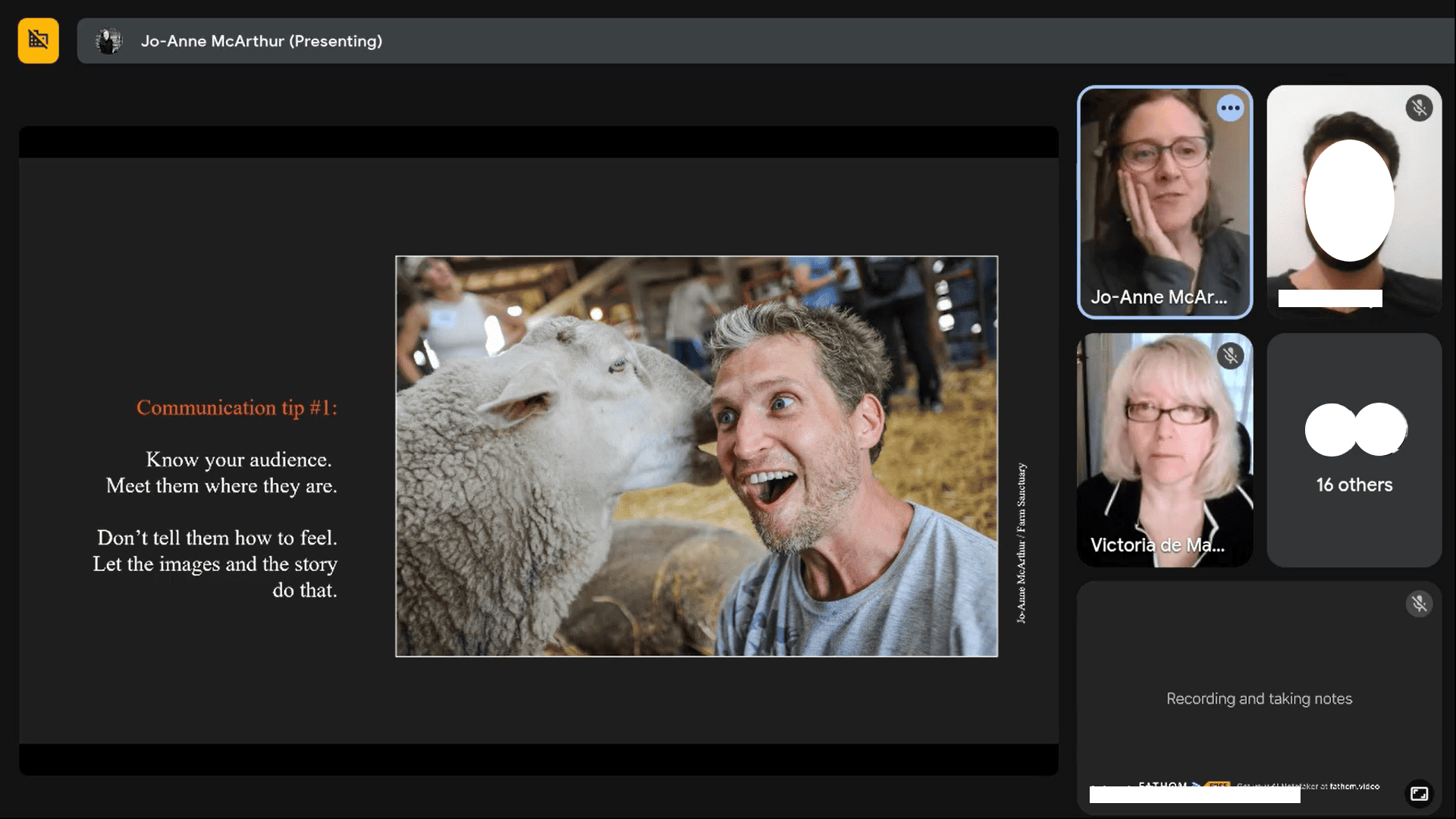
Lesson 3: Photojournalism
3. Asia-Focused Content
Unlike our first cycle, cycle 2 was exclusively for Asia-based activists. This wasn’t an administrative choice – it was strategic. We’re committed to empowering the Asian investigative ecosystem, and we designed the content to reflect local contexts, risks, and realities.
We had 20 participants from India, Indonesia, the Philippines, Malaysia, and Singapore. The content was therefore Asia-focused and involved Asian speakers, which made discussions more grounded and immediately relevant – especially when it came to practical and cultural constraints, regional risks, and tactics that translate into real-world action.
4. Networking as a Core Outcome, Not a Side Benefit
One of the most important aims of the masterclass was to strengthen connections across the region, helping participants meet other investigators, whether newer or more seasoned, working in different contexts and countries.
This kind of networking has real professional value: it supports collaboration, mentorship, and the exchange of knowledge, information and resources. But it also matters socially and mentally – investigative work can be isolating, emotionally heavy, and at times risky. Knowing you’re not doing it alone, and having trusted peers you can learn from or simply speak with, can be a crucial part of staying safe and motivated for the long term.
Reflections and Next Steps: Participation, Practice, and Feedback
1. What Completion Rates Told Us (and What We’ll Change)
From a participation standpoint, here’s what we observed:
- Average completion rate: 58%.
- 8/20 participants completed at least 65% of lessons and assignments and were eligible for graduation certificates.
While drop-off is common in long virtual programs, we expected higher completion rates given the upfront commitment participants made. This insight is valuable. It highlights the structural realities activists face: unpredictable schedules, campaign surges, emotional intensity, and the pressure of weekly deliverables.
As a result, we plan to shorten the next cycle to 7–8 weeks. A more concentrated structure should help maintain momentum, reduce drop-off, and make completion more realistic, while preserving the depth and rigor of the training.
2. Participants Feedback
For Cycle 2, the final survey was shared with the 14 participants who completed at least 50% of the lessons and assignments. 7 participants completed the survey. The feedback was encouraging and consistent:
- Everyone agreed (or strongly agreed) that sessions were interesting and beneficial.
- Respondents agreed (or strongly agreed) assignments were effective, though some felt they weren’t challenging enough. Such feedback points toward more field-oriented and less frequent assignments.
- Everyone reported high satisfaction and said they would recommend the course.
- Many even said they would still participate if the course included a $20 fee.

Footage Captured by One of the Participants as Part of a Home Assignment
3. Participant Reflections: What Impact Felt Like
Beyond numbers, the strongest validation came from participant reflections. One quote captured the value of skill-sharing and how it strengthens confidence, belonging, and long-term commitment:
“The masterclass was a world of new learning and knowledge, so many new perspectives, and the chance to hear amazing activists doing incredible world all around the world. It was also reassuring to know the work that is going on everywhere, the passion and commitment so many others have. It was inspiring. And i am so grateful for the course and to be part of it. Thank you all for creating this for the movement.”
Participants also highlighted structure and quality:
“The Investigation Masterclass was very well structured, with excellent-quality speakers. The sessions were thoughtfully planned and covered all key aspects of investigations… Overall, the quality of the masterclass was top-notch. Thank you, I would definitely recommend it to others.”
And perhaps most powerfully:
“The content taught in the course was extremely necessary and I believe every activist must attend it as I learned thousands of new things (even after being an activist for 7 years).”
Such statements helped validate both the importance of the project and the need for another cycle in the coming year, especially as we already have applicants waiting for the next cycle to open.
Beyond learning and inspiration, the impact of the masterclass has already begun to translate into practice. Several participants captured original footage as part of their assignments, and some initiated internal discussions within their organizations about strengthening documentation standards and investigative planning. While the program was primarily educational, its ripple effects are visible in how participants now approach fieldwork, strategy, and collaboration.
Final Words
Cycle 2 confirmed something important: building investigative capacity in Asia is both urgent and achievable. When activists are given structured, high-quality training rooted in regional realities, the impact extends far beyond a single cohort. Over 12 weeks, participants strengthened practical skills, built cross-border relationships, and contributed to a growing investigative ecosystem in the region.
The participation data also provided valuable clarity. It reinforced the importance of designing programs that match the lived realities of activists, balancing depth with sustainability. These insights will directly shape the structure of Cycle 3.
With demand already growing and applicants waiting for the next cohort, we are moving forward with sharper focus. Because our primary work is centered in India, the upcoming cycle will place greater emphasis on India-based investigations, with case studies, examples, and strategic discussions tailored to on-the-ground realities.
Strengthening investigative capacity is not a one-time intervention; it is long-term ecosystem work. Each trained investigator increases the movement’s ability to document, expose, and advocate effectively. Cycle 3 will build on these foundations with a tighter structure, deeper contextual focus, and continued commitment to excellence.
If you’re an India-based activist looking to strengthen your investigative skills and connect with a serious regional network, we encourage you to reach out or watch for the next announcement.
Contact: cipherdrift@proton.me | Signal: neo.101 | Keybase: neo_101