Key Findings
- Animals tied through noses, mouths, and faces using short ropes
- Overcrowding and prolonged tethering, including among calves
- Suspected oxytocin use and Khal bachha practices
- Milking conducted near sewage, drains, garbage, and manure
- Unsafe carcass disposal and widespread waste mismanagement
- Weak veterinary access and limited farmer support systems
- Dairy units operating close to homes, schools, roads, and water bodies
- Repeated signs of weak monitoring and regulatory enforcement
Introduction
India is the world’s largest producer of milk, and dairy plays a central role in the country’s food system and rural economy. Yet behind this vast industry, countless animals are kept in conditions that raise serious concerns about animal welfare, hygiene, public health, and environmental safety. We at Sentient launched our first investigation of 2026 to document these hidden realities and challenge the misleading narratives promoted by the dairy industry.
Over more than two months, our investigators documented conditions across dozens of locations, including farms, unregulated dairy clusters, and carcass dumping areas. Field visits were conducted across Bihar, West Bengal, Chhattisgarh, Chandigarh, Punjab, and Uttarakhand. Across these locations, investigators repeatedly documented concerns related to animal welfare, public health, environmental pollution, and weak enforcement of existing guidelines. The findings suggest that many harmful practices have become normalized within parts of the dairy system, continuing with little oversight or accountability.
Findings
1. Animal Welfare
Animal welfare concerns were evident across most of the locations documented.
Overcrowding was a recurring issue in many dairy units visited. Animals were often confined to cramped spaces with little room to move, lie down comfortably, or express natural behaviour. Many remained tied for long periods using short ropes attached to their noses, mouths, or faces. Young calves were also found tethered in restrictive conditions, limiting movement from an early age.
Investigators documented several forms of tethering, including double and triple tethering. In some locations, cows and buffaloes were kept outdoors under direct sunlight without adequate shelter or protection from harsh weather conditions. The effects of prolonged tethering were clearly visible in the animals’ behaviour. Some cows and buffaloes repeatedly shook their heads or attempted to pull away from restraints, while others appeared restless, weak, or unusually inactive. Several animals lay motionless for extended periods, suggesting exhaustion, injury, illness, or distress.
The investigation also documented the use of Khal bachha practices in multiple locations. This practice involves using dummy calf made of straw and calfskin to trigger a mother’s natural milk let down response, reflecting the exploitation of both cows and calves for continued milk production.

A neglected, tethered calf alone in the dirt.

Khal baccha (stuffed calf body) hanged on a pole.
The suspected illegal use of oxytocin injections was also repeatedly indicated. Investigators observed bottles and syringes, and in some cases dairy owners admitted to their use.
Medical care was another recurring concern. Investigators observed signs of untreated malnutrition, swollen joints, skin infections, and open wounds. Across many locations, animals appeared weak, distressed, and visibly uncomfortable. In several units, treatment appeared to be carried out without the presence of a qualified veterinarian.
Dairy owners also reported limited access to veterinary services, vaccination support, subsidies, and insurance, as well as disease outbreaks such as foot and mouth disease.
2. Pollution, Public Health, and Food Safety Concerns
Environmental and public health concerns were documented across every state covered in the investigation. Many dairy units operated close to homes, schools, roads, rivers, and public spaces, increasing the risk that poor waste management and unhygienic practices could directly affect nearby communities.
In urban and peri urban areas, some dairy units were located only a short distance from residential spaces and drinking water sources. Investigators documented units operating near streams, wells, reservoirs, and drainage systems where wastewater and animal waste were poorly managed. Investigators frequently observed milking taking place in unhygienic surroundings, including near open drains, sewage, garbage, and accumulated manure. Both manual and automated milking methods were documented under these conditions. In several locations, milk was stored in open containers exposed to contamination, raising serious concerns about food safety and hygiene standards.
Waste management practices were often inadequate and poorly regulated. Manure was frequently left to accumulate inside sheds or surrounding areas with irregular cleaning schedules. In several locations, manure and slurry were washed directly into open drains, contributing to wastewater overflow and contamination of nearby public spaces.
Carcass disposal emerged as another serious concern. Investigators documented cases where dead animals were discarded in plastic bags and dumped in open carcass disposal areas. In some locations, decomposing carcasses were found in poorly managed public spaces accessible to animals and nearby communities.
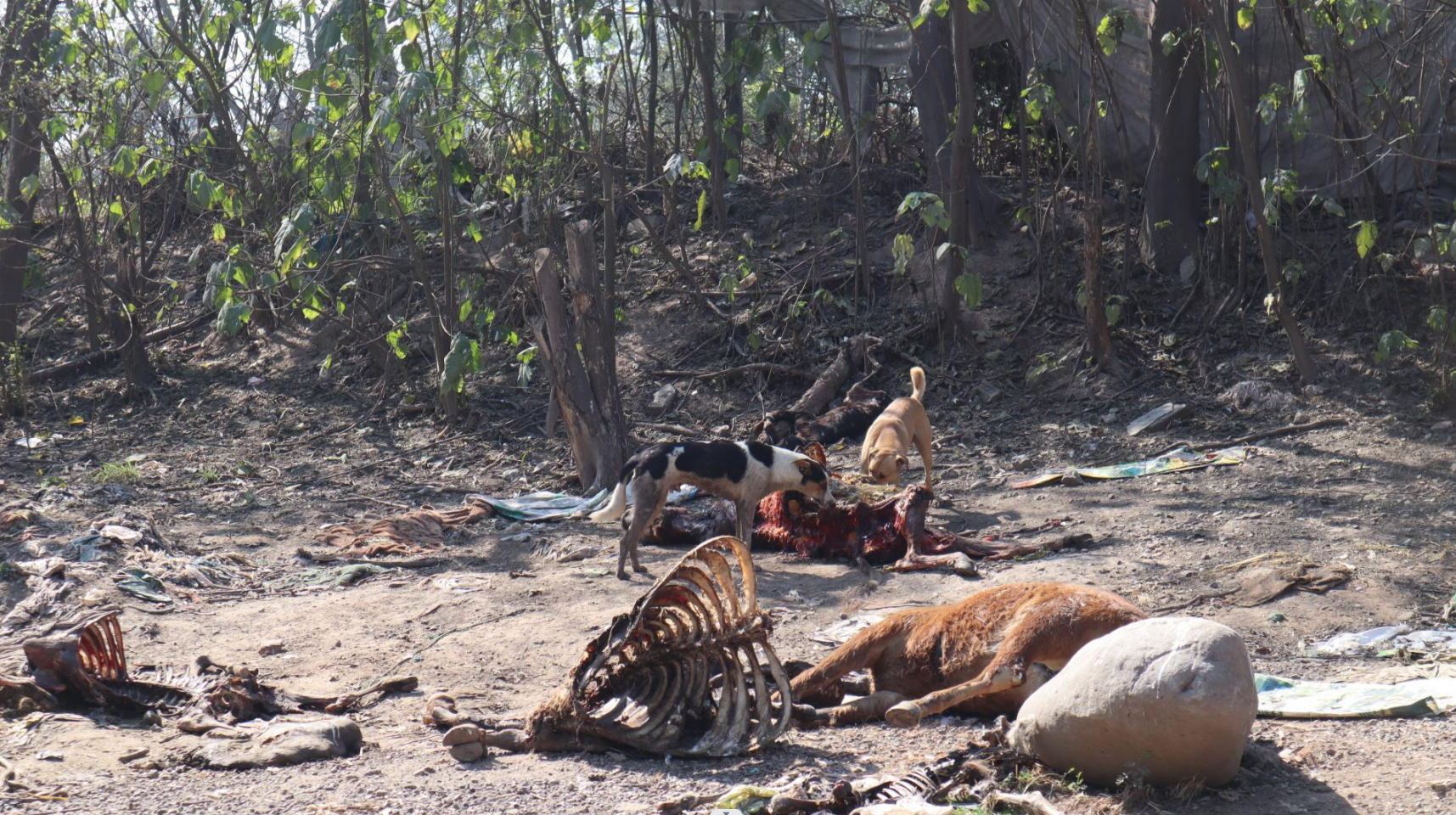
Wild dogs feeding of rotten body parts in a carcass disposal area.
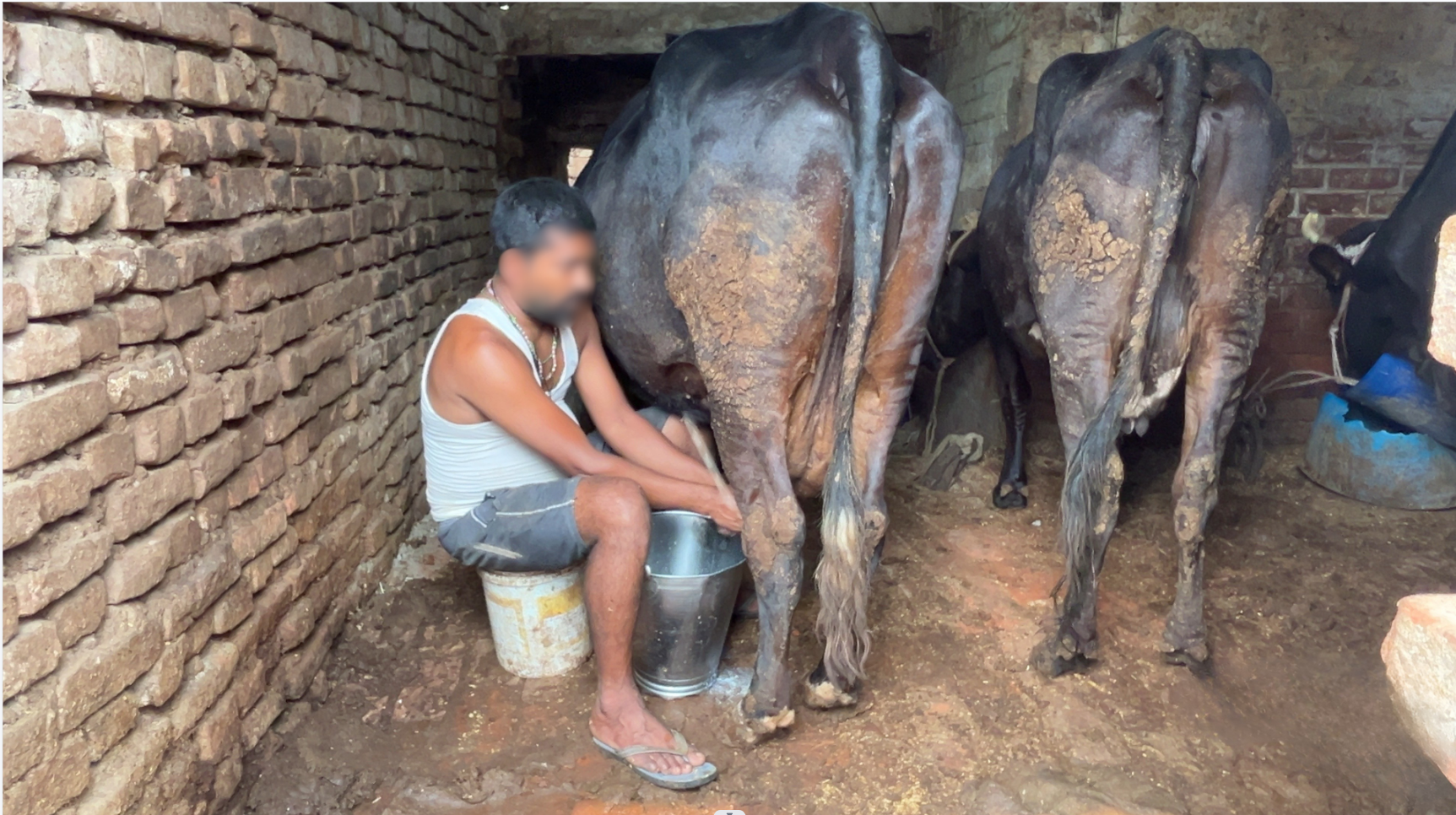
Milking in unhygienic environment.
Animals were also observed feeding on garbage or hotel waste in certain areas, reflecting poor feeding practices and limited oversight. In other locations, goats and cows were kept together within the same units, suggesting weak biosecurity and poor management standards.
Combined with poor drainage, inadequate ventilation, lack of shelter, and close proximity to residential areas, these conditions highlight the overlap between animal welfare concerns, pollution risks, public health, and food safety issues.
3. Weak Enforcement and Regulatory Failure
The presence of dairy units near residential areas, water bodies, and public roads indicates weak implementation of existing laws and guidelines. Despite repeated concerns related to animal welfare, pollution, sanitation, and public health, investigators observed little evidence of consistent monitoring or corrective action.
Some farms appeared to operate without formal registration. In certain areas, relocation drives or administrative interventions had reportedly taken place, but enforcement appeared inconsistent and limited.
Dairy owners in some locations also reported difficulties accessing veterinary care, vaccination programs, insurance, subsidies, and financial support systems. Allegations of corruption within insurance and financial processes were also mentioned during field conversations.
Together, these findings point to broader systemic failures rather than isolated incidents. Similar practices were documented repeatedly across multiple states, suggesting significant gaps in oversight, enforcement, accountability, and farmer support systems.

Dirty, possibly unregulated dairy unit.
Final Words
Sentient’s first investigation of 2026 reveals widespread and systemic concerns across dairy farms in India. From Chandigarh, Punjab, and Uttarakhand to Bihar, West Bengal, and Chhattisgarh, investigators documented overcrowding, prolonged tethering, lack of shelter, poor hygiene, pollution hazards, injuries, Khal bachha practices, suspected illegal substance use, inadequate veterinary care, and weak regulatory oversight.
The investigation makes clear that poor animal welfare and unhygienic dairy practices are not isolated incidents. Across multiple states, harmful conditions appeared routine and normalized, sustained by weak enforcement, inconsistent monitoring, and limited support systems for both animals and farmers. When such conditions become part of everyday operations, they are less likely to be questioned, reported, or corrected.
Addressing these issues requires more than temporary intervention. It demands sustained oversight, stronger implementation of existing laws, accessible veterinary services, transparent farmer support systems, and greater public awareness. Without accountability, animals will continue to suffer while risks to public health and the environment persist across regions.
These realities continue because they remain hidden. Help us expose the truth.
Sentient is continuing to document and expose conditions within India’s dairy industry through ongoing investigations, public awareness efforts, and advocacy campaigns aimed at increasing transparency and accountability around milk production and consumption in India.
Follow our social media channels to see what our investigators uncovered and to stay updated as we continue building public awareness and pressure for change.
If you witness animal abuse or suspect pollution or public health violations connected to dairy operations, please contact us.
You can also reach out if you would like Sentient to investigate animal related concerns in India or support global investigation efforts aimed at exposing cruelty, environmental harm, and hidden practices within animal industries.
Whatsapp: +972544556562 | Signal: neo.101